Military History
The Military History Toolkit inspires individuals and communities to explore our military heritage to foster deeper understanding of service, sacrifice, and the enduring legacy of the U.S. military.
Film Excerpt Screener
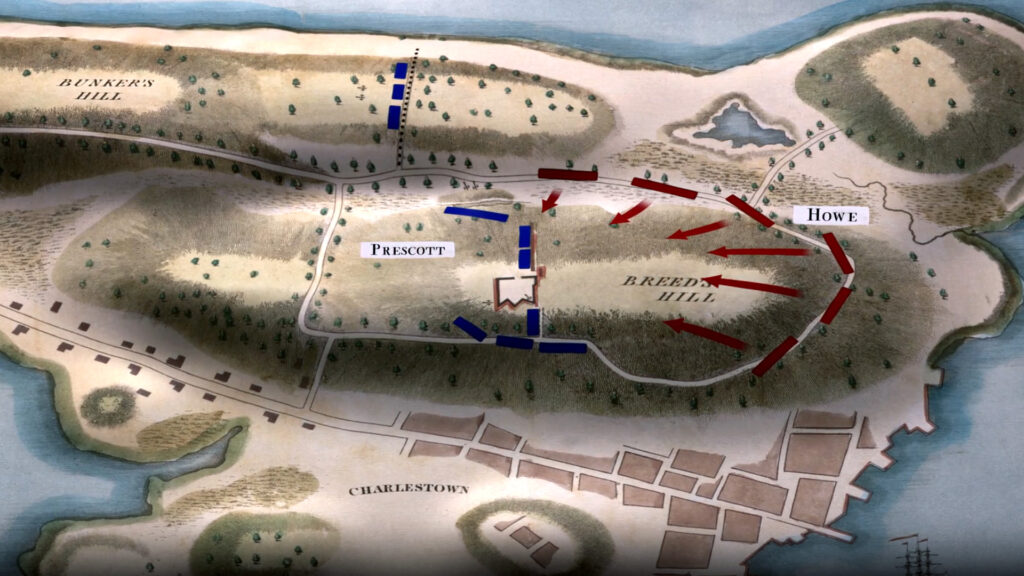
The Military History screening reel includes selected excerpts from the series and is designed to encourage discussion about military history and strategy during the American Revolution.
Screening Reel Description
The Military History reel is available in three lengths to accommodate a variety of engagement activities. The reels include selected excerpts from the series and are designed to encourage discussion about military history and strategy during the American Revolution.
Discussion Questions
These questions are designed to encourage thoughtful discussion about THE AMERICAN REVOLUTION, especially around military history and strategy.
Reading List
Military History Word Search
Download this revolutionary word search and challenge your knowledge of military history.
Revolutionary War Maps
Explore the Revolutionary War through detailed battlefield maps, from the first clashes at Lexington and Concord to the decisive victory at Yorktown. These maps highlight key turning points that shaped the fight for American independence. For more on American Revolution battlefield maps, please visit American Battlefield Trust at www.battlefields.org/maps. All maps are © American Battlefield Trust.
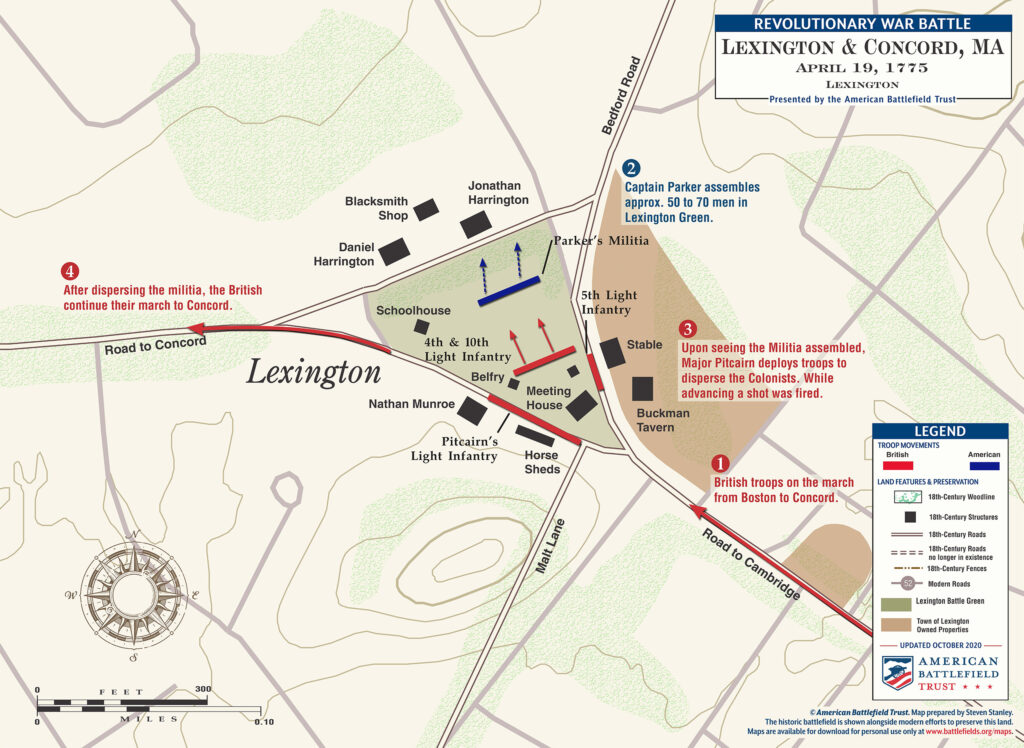
Battle of Lexington and Concord (April 18 – 19, 1775). Colonial militias resisted British troops attempting to seize weapons. Often called the “shot heard round the world”, this is considered the battle that ignited the Revolution. © American Battlefield Trust. Map prepared by Steven Stanley.
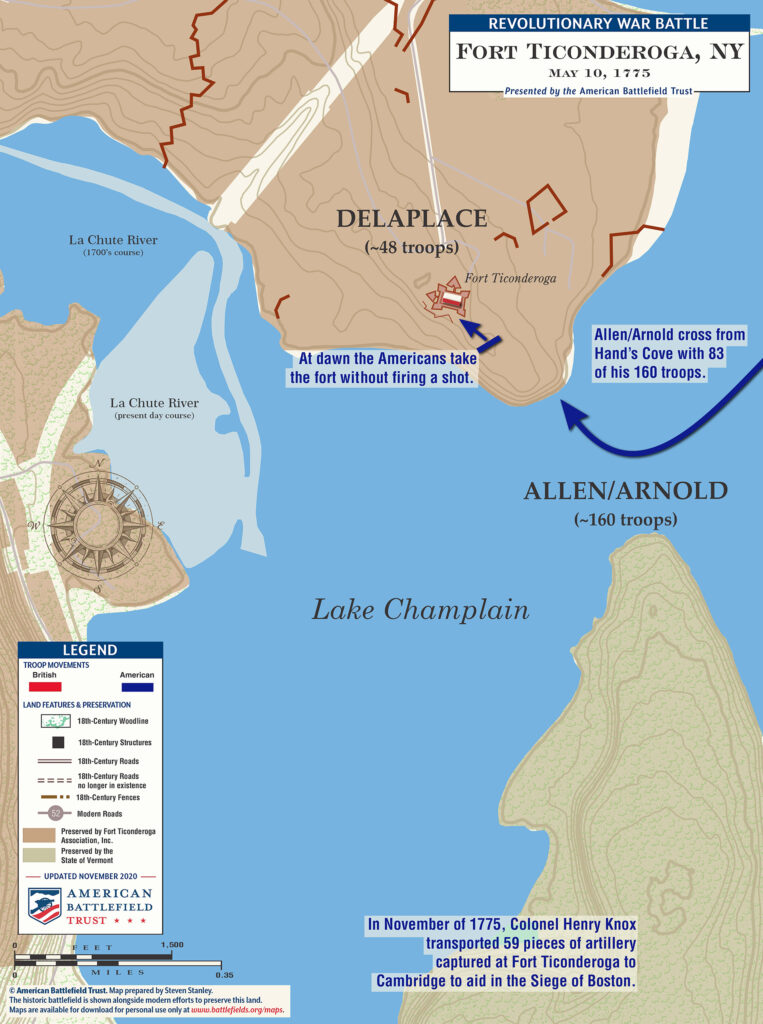
Battle of Fort Ticonderoga (July 2 – 6, 1777). British General John Burgoyne forced the American garrison to abandon the fort by positioning artillery on nearby Mount Defiance. © American Battlefield Trust. Map prepared by Steven Stanley.
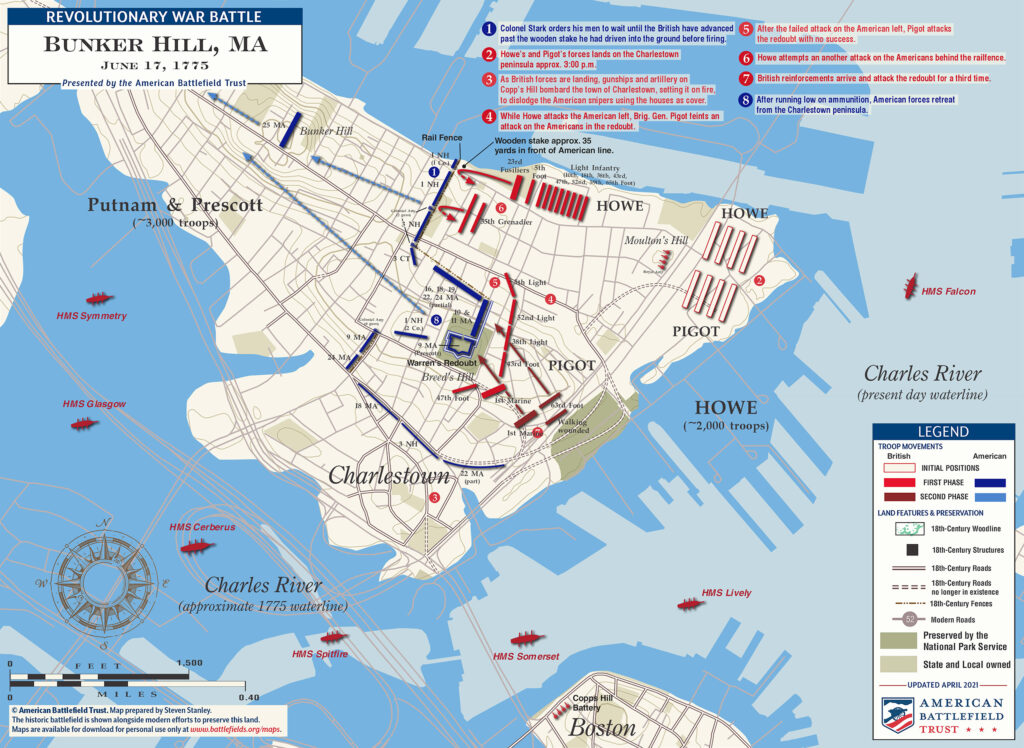
Battle of Bunker Hill (June 17, 1775). Colonial militiamen fortified Breed’s Hill near Boston and withstood two British assaults before running out of ammunition. © American Battlefield Trust. Map prepared by Steven Stanley.
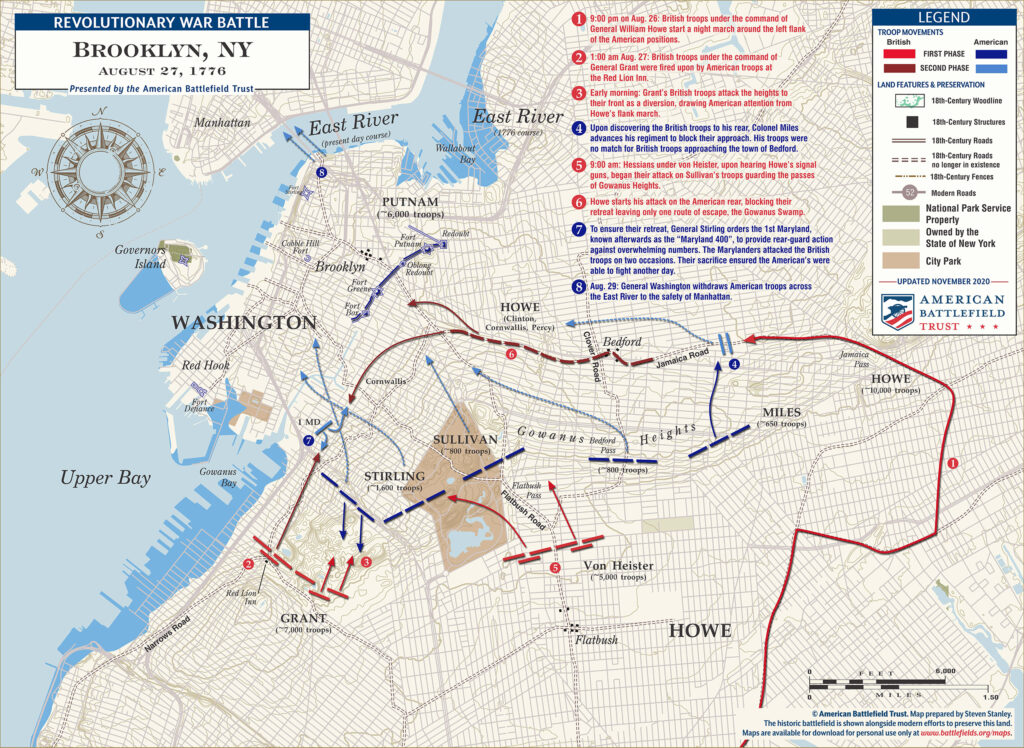
Battle of Long Island (August 22 – 27, 1776). British forces outflanked Washington’s army, forcing a retreat to Brooklyn Heights and a nighttime evacuation across the East River. © American Battlefield Trust. Map prepared by Steven Stanley.
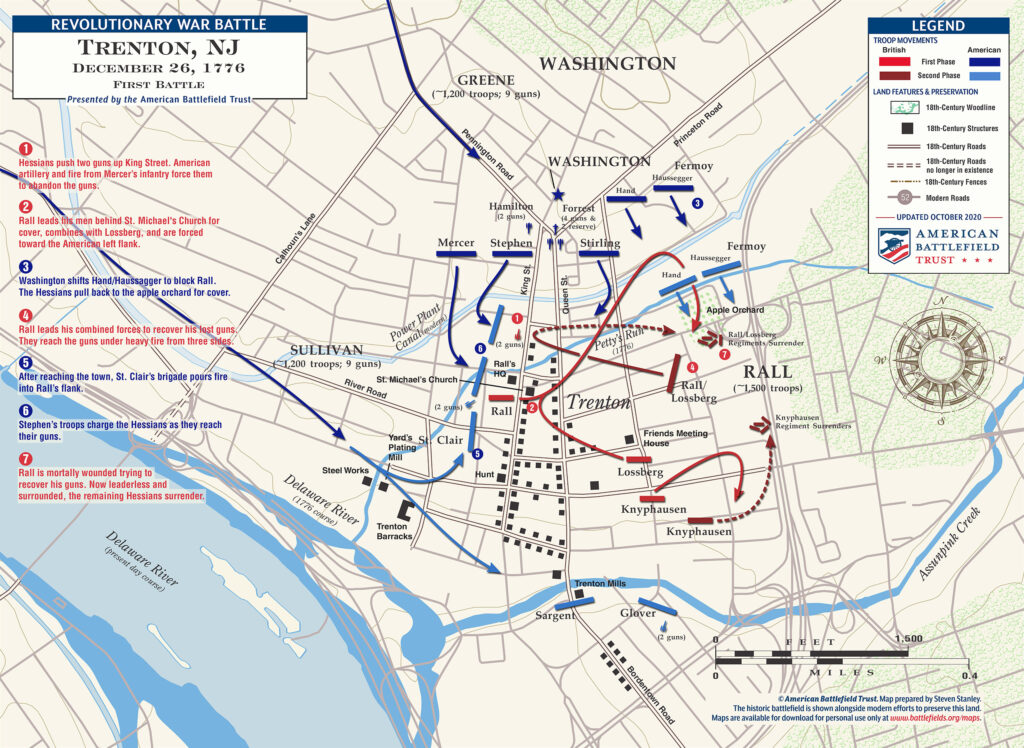
Battle of Trenton (December 26, 1776). George Washington led a surprise attack on Hessian forces in New Jersey after crossing the Delaware River. © American Battlefield Trust. Map prepared by Steven Stanley.
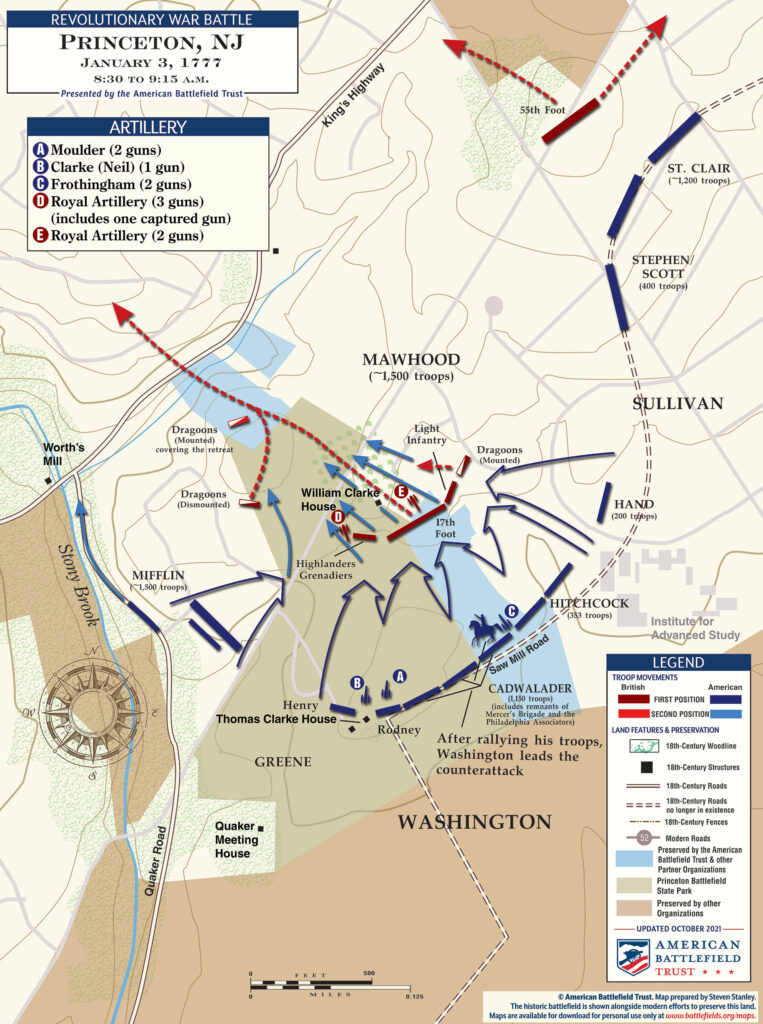
Battle of Princeton (January 3, 1777). George Washington’s forces launched a surprise attack on British troops in New Jersey, achieving a crucial victory that boosted morale. © American Battlefield Trust. Map prepared by Steven Stanley.
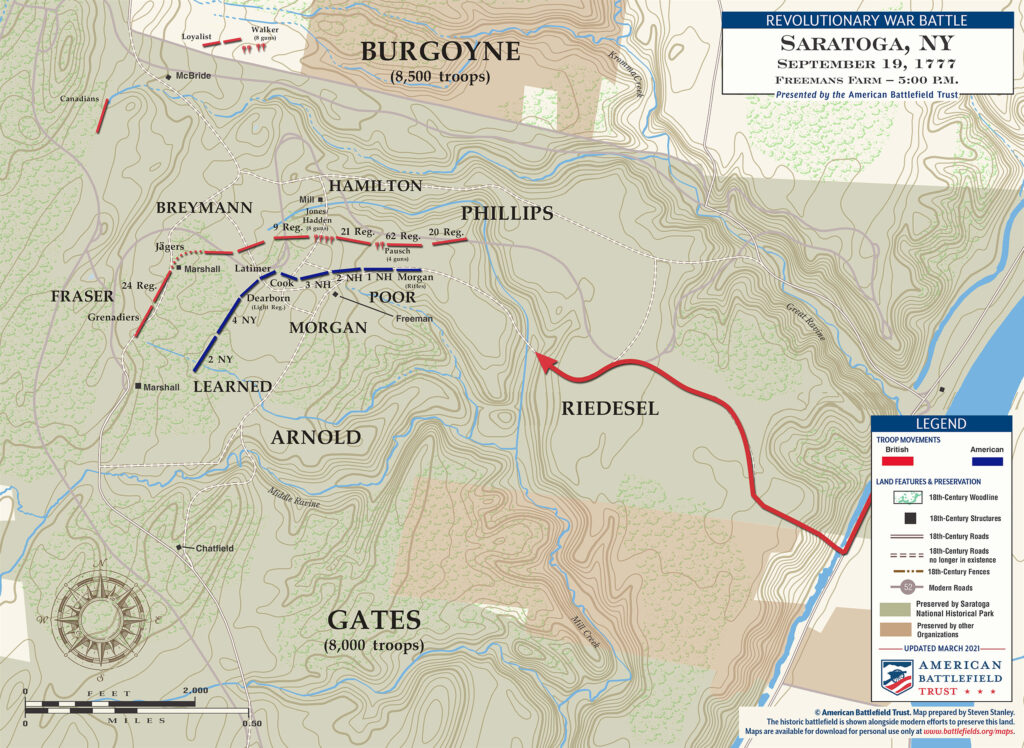
Battle of Saratoga (September 19, 1777). The first engagement at Freeman’s Farm saw American forces hold off British attacks, inflicting heavy losses and setting the stage for the decisive victory at Bemis Heights. © American Battlefield Trust. Map prepared by Steven Stanley.
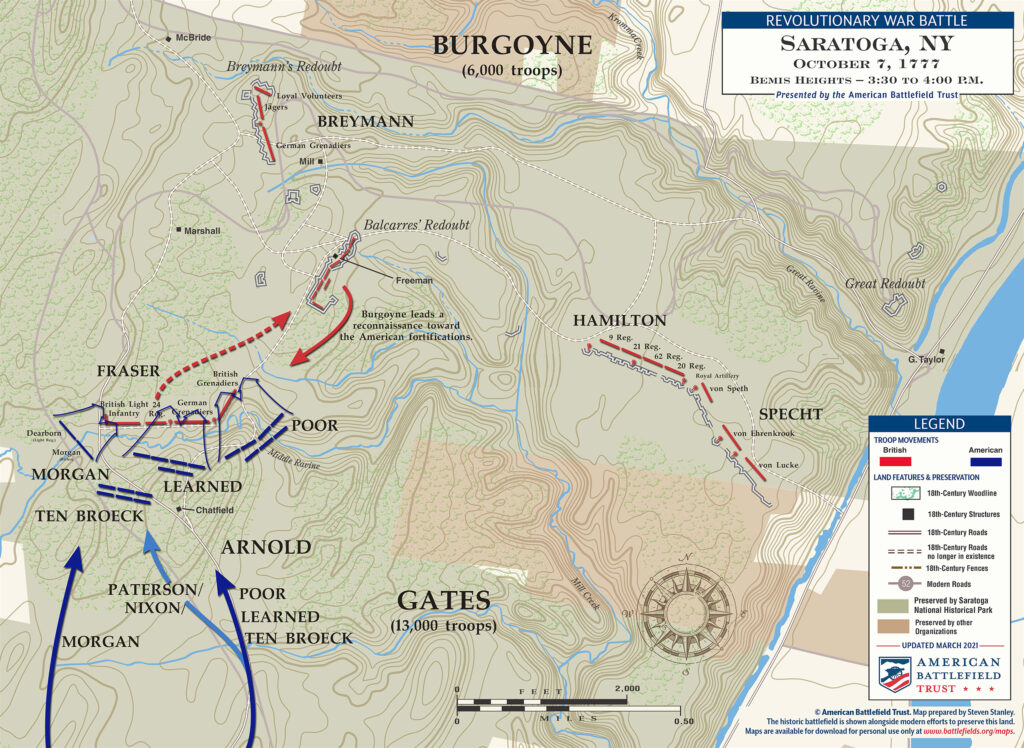
Battle of Saratoga (October 7, 1777). American forces decisively defeated the British at Bemis Heights, forcing General Burgoyne’s surrender and securing French support, a turning point in the Revolution. © American Battlefield Trust. Map prepared by Steven Stanley.
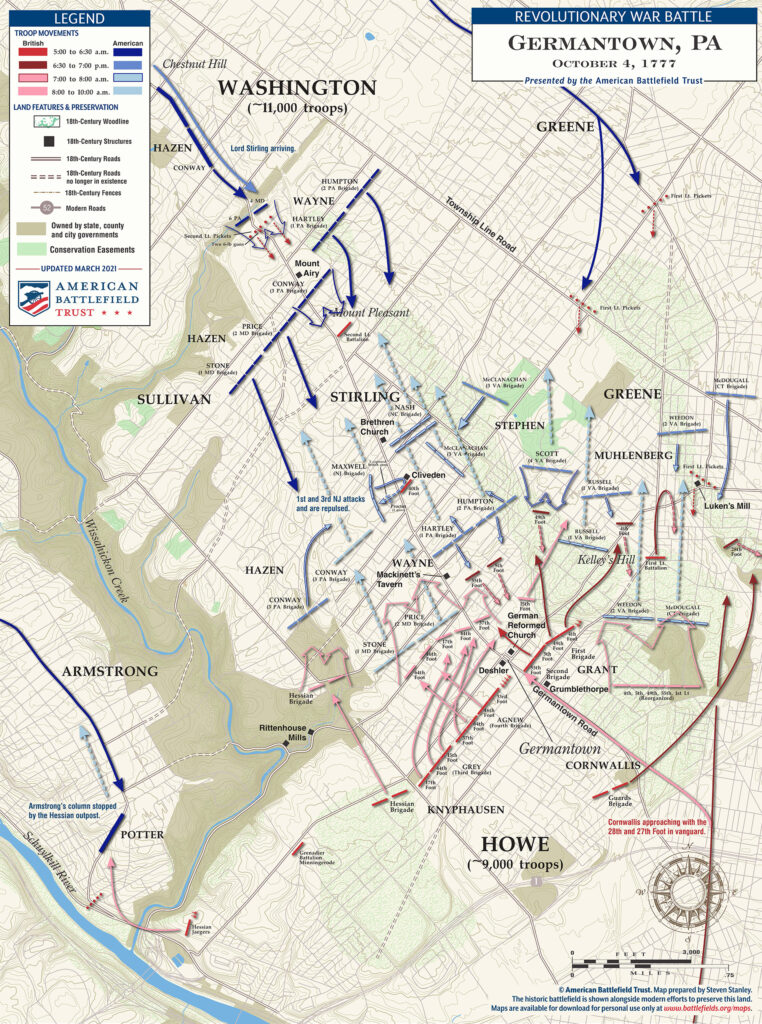
https://drive.google.com/file/d/1pHpbTM2FazZiEKs5qd05cNWvz3RTVLJ1/view?usp=sharing Battle of Germantown (October 4, 1777). American forces under George Washington launched a multi-pronged attack on British troops near Philadelphia, with fog and confusion leading to a retreat. © American Battlefield Trust. Map prepared by Steven Stanley.
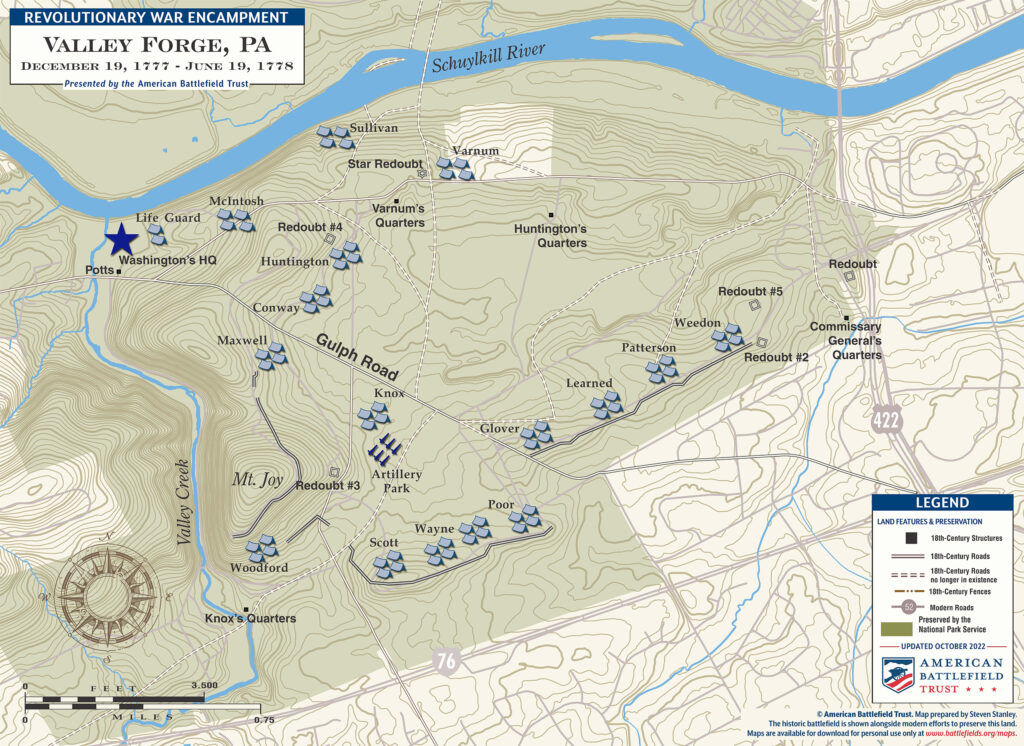
Valley Forge (December 19, 1777 – June 19, 1778). George Washington’s Continental Army endured a harsh winter with limited supplies, disease, and hunger. Training by Baron von Steuben and the support of women and families transformed the troops into a disciplined, resilient fighting force. © American Battlefield Trust. Map prepared by Steven Stanley.
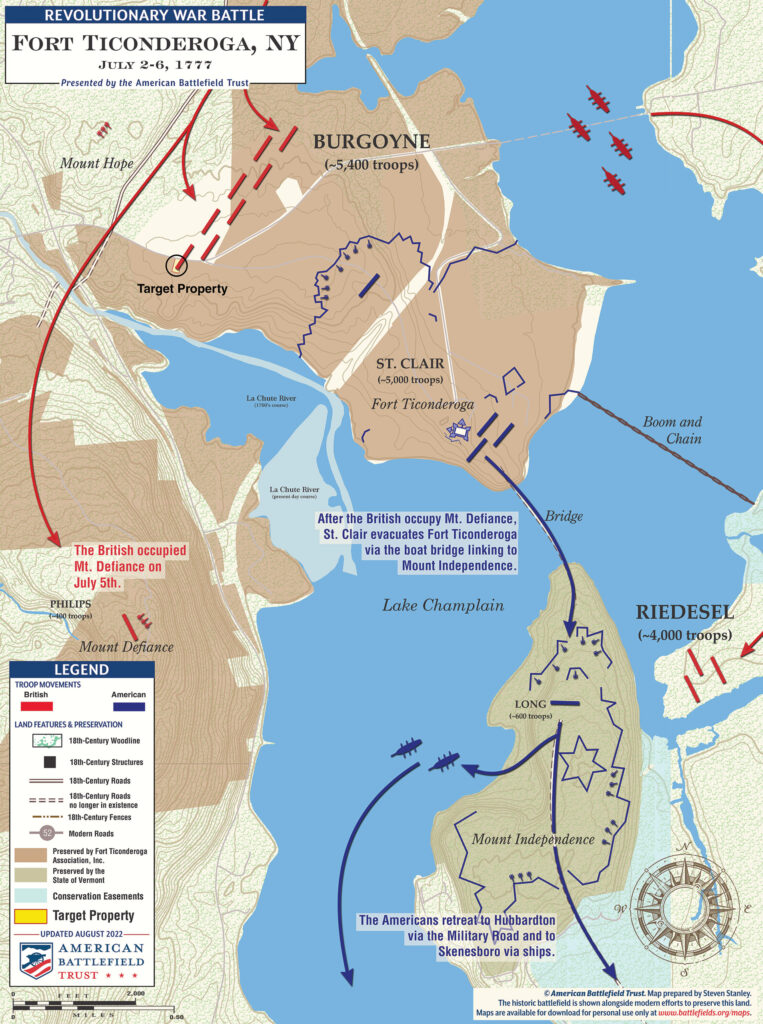
Battle of Fort Ticonderoga (July 2 – 6, 1777). British General John Burgoyne forced the American garrison to abandon the fort by positioning artillery on nearby Mount Defiance. © American Battlefield Trust. Map prepared by Steven Stanley.
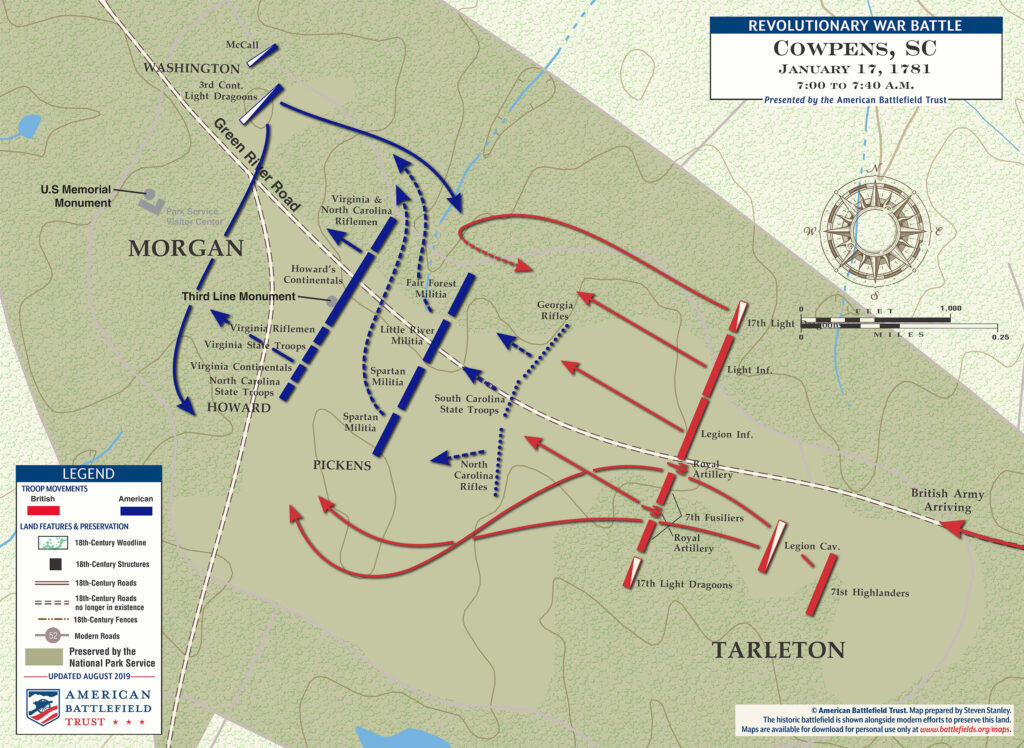
Battle of Cowpens in three maps (January 17, 1781) 7:00 – 7:40 a.m. In South Carolina, General Daniel Morgan’s Continental troops used clever tactics to lure and trap British forces under Banastre Tarleton, a turning point in the South. © American Battlefield Trust. Map prepared by Steven Stanley.
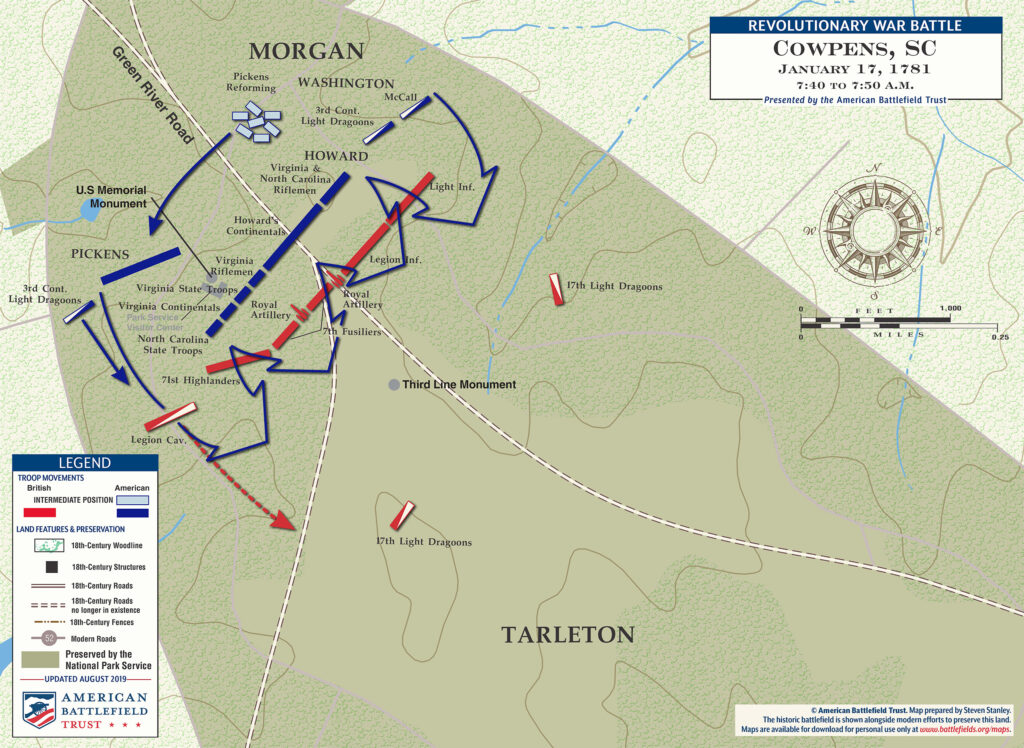
Battle of Cowpens in three maps (January 17, 1781) 7:40 – 7:50 a.m. In South Carolina, General Daniel Morgan’s Continental troops used clever tactics to lure and trap British forces under Banastre Tarleton, a turning point in the South. © American Battlefield Trust. Map prepared by Steven Stanley.
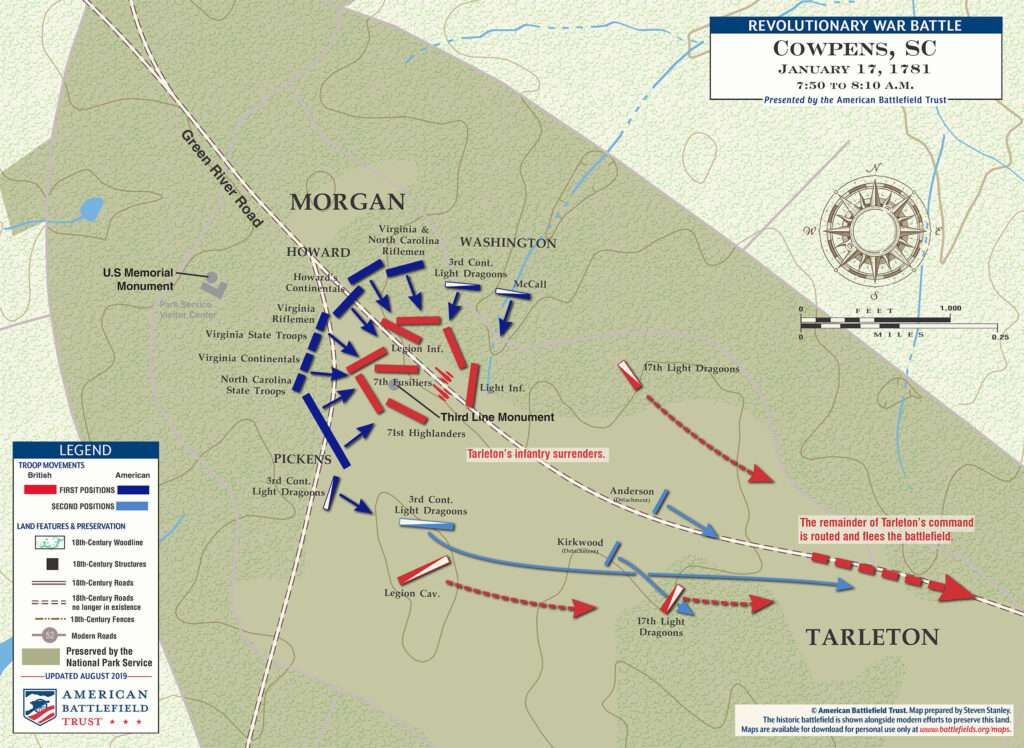
Battle of Cowpens in three maps (January 17, 1781) 7:50 – 8:10 a.m. In South Carolina, General Daniel Morgan’s Continental troops used clever tactics to lure and trap British forces under Banastre Tarleton, a turning point in the South. © American Battlefield Trust. Map prepared by Steven Stanley.
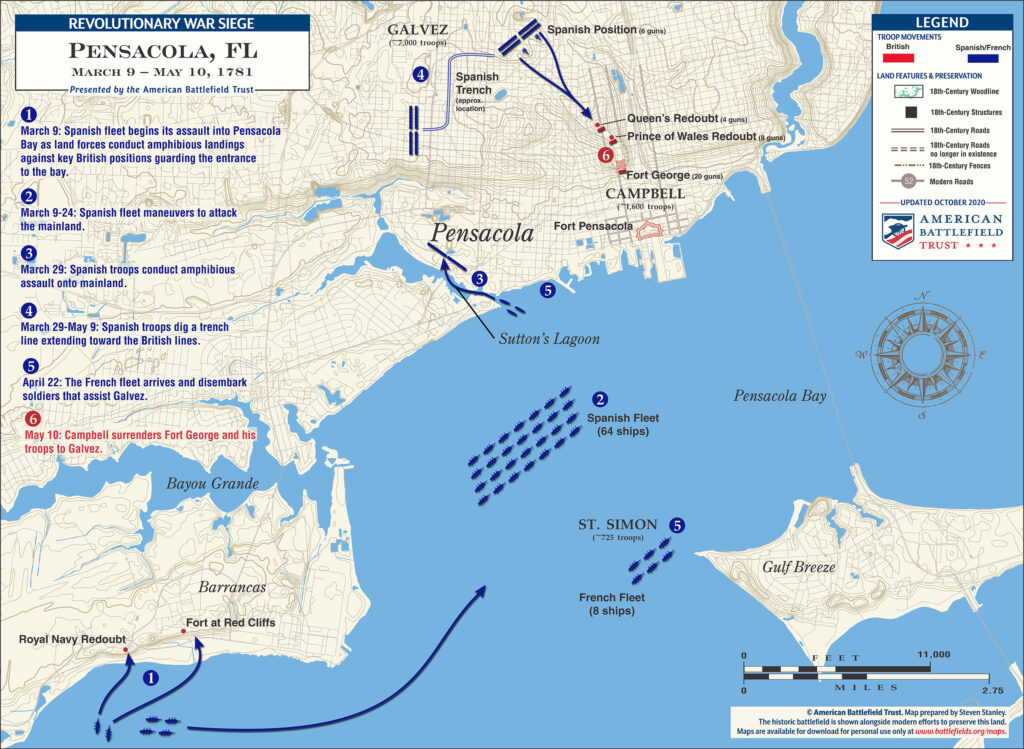
Siege of Pensacola (March 9 – May 10, 1781). Bernardo de Gálvez led Spanish forces to capture the British-held city, securing West Florida and delivering a key blow to Britain’s control of the Gulf Coast. © American Battlefield Trust. Map prepared by Steven Stanley.
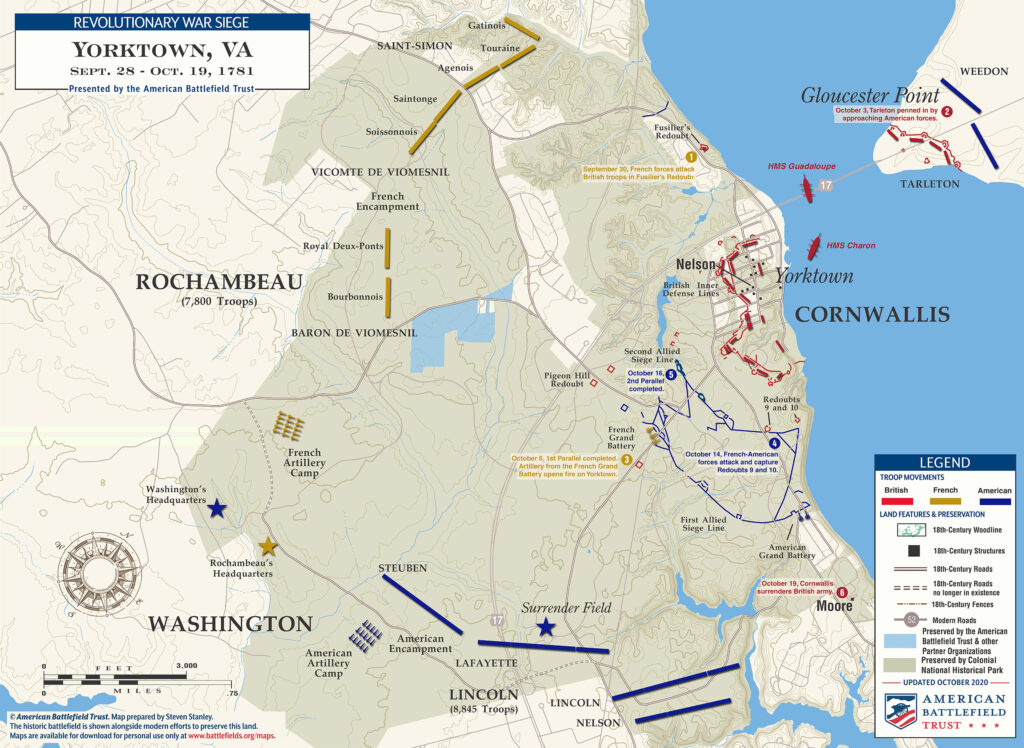
Siege of Yorktown (September 28 – October 19, 1781). American and French forces surrounded British troops under General Cornwallis in Virginia, capturing key positions and bombarding the town. Cornwallis’s surrender effectively ended the Revolutionary War. © American Battlefield Trust. Map prepared by Steven Stanley.
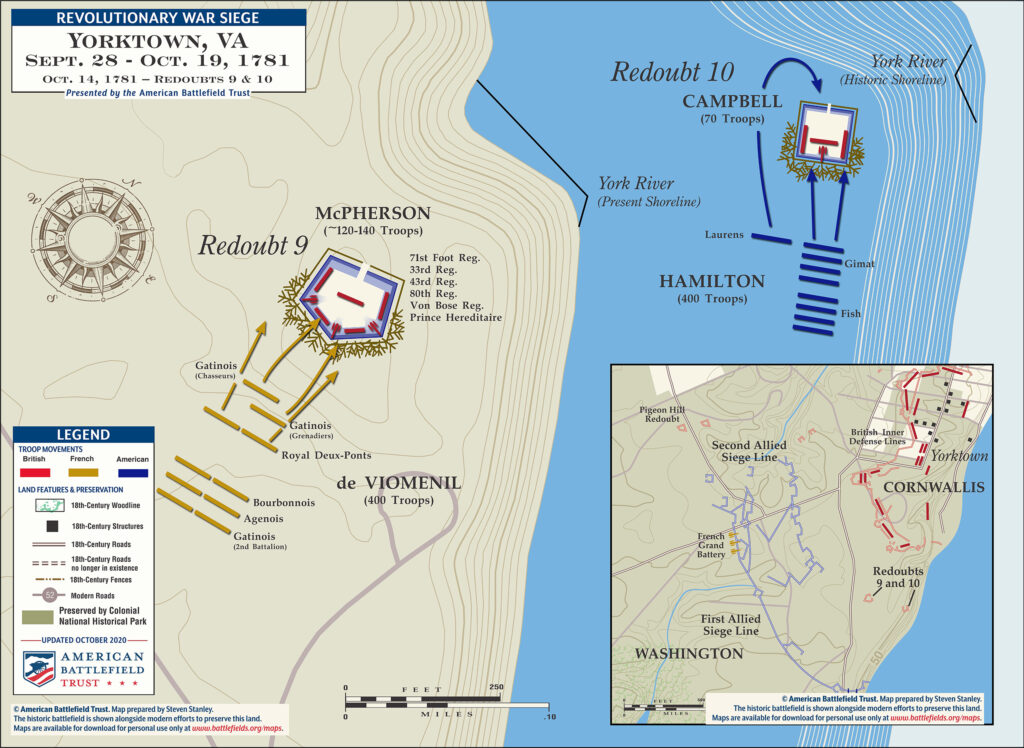
Siege of Yorktown (October 14, 1781). A map with the capture of Redoubts 9 and 10 — the Revolution’s decisive victory. © American Battlefield Trust. Map prepared by Steven Stanley.
Event Participation Survey
If you are hosting a screening event, please consider sharing this Event Participation Survey with your audience. This survey will help us improve development of future engagement programming. Thank you!